
Also known as Pescestoccu by my Sicilian father of Stocca Fisso in other dialects, it is simply a codfish that has been dried in the sun until it achieves the consistency of a piece of wood!
Stockfish originated in Norway, some saying as far back as 875AD. Codfish caught in the cold local water are hung up on wooden racks in the sun and salt air in that region. It is a unique way of preserving the fish in a slow and cold drying and fermentation process, as opposed to smoking or salting the fish.

Drying codfish (‘hjell’) in Norway
“Hjell-oversikt.arj”. Licensed under CC BY-SA 3.0 via Wikimedia Commons – http://commons.wikimedia.org/wiki/File:Hjell-oversikt.arj.jpeg#/media/File:Hjell-oversikt.arj.jpeg
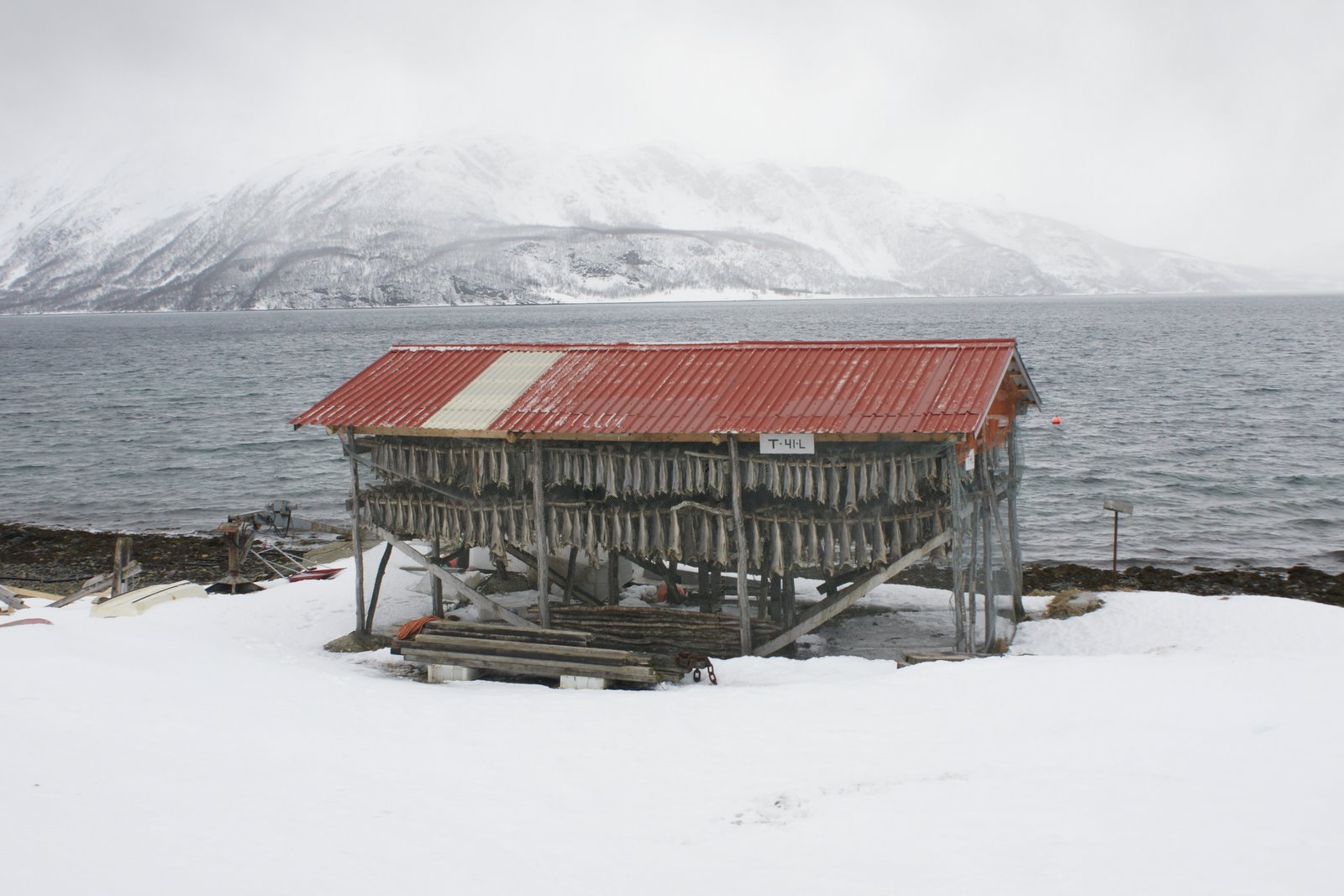
“Cod drying in Lyngen” by Valugi – Own work. Licensed under CC BY-SA 3.0 via Wikimedia Commons – http://commons.wikimedia.org/wiki/File:Cod_drying_in_Lyngen.JPG#/media/File:Cod_drying_in_Lyngen.JPG
It is important to distinguish Pescestoccu or Stockfish from Baccala, which is a salt cured variety of cod or related white fish. I personally prefer the Pescestoccu and it was the only kind of preserved fish prepared by my father, usually during the Christmas Holidays, as a part of the “7 Fishes Xmas Eve Dinner” tradition for good luck in the coming year. This fish is exported all over the world for centuries, but it was particularly relished by the Italians.
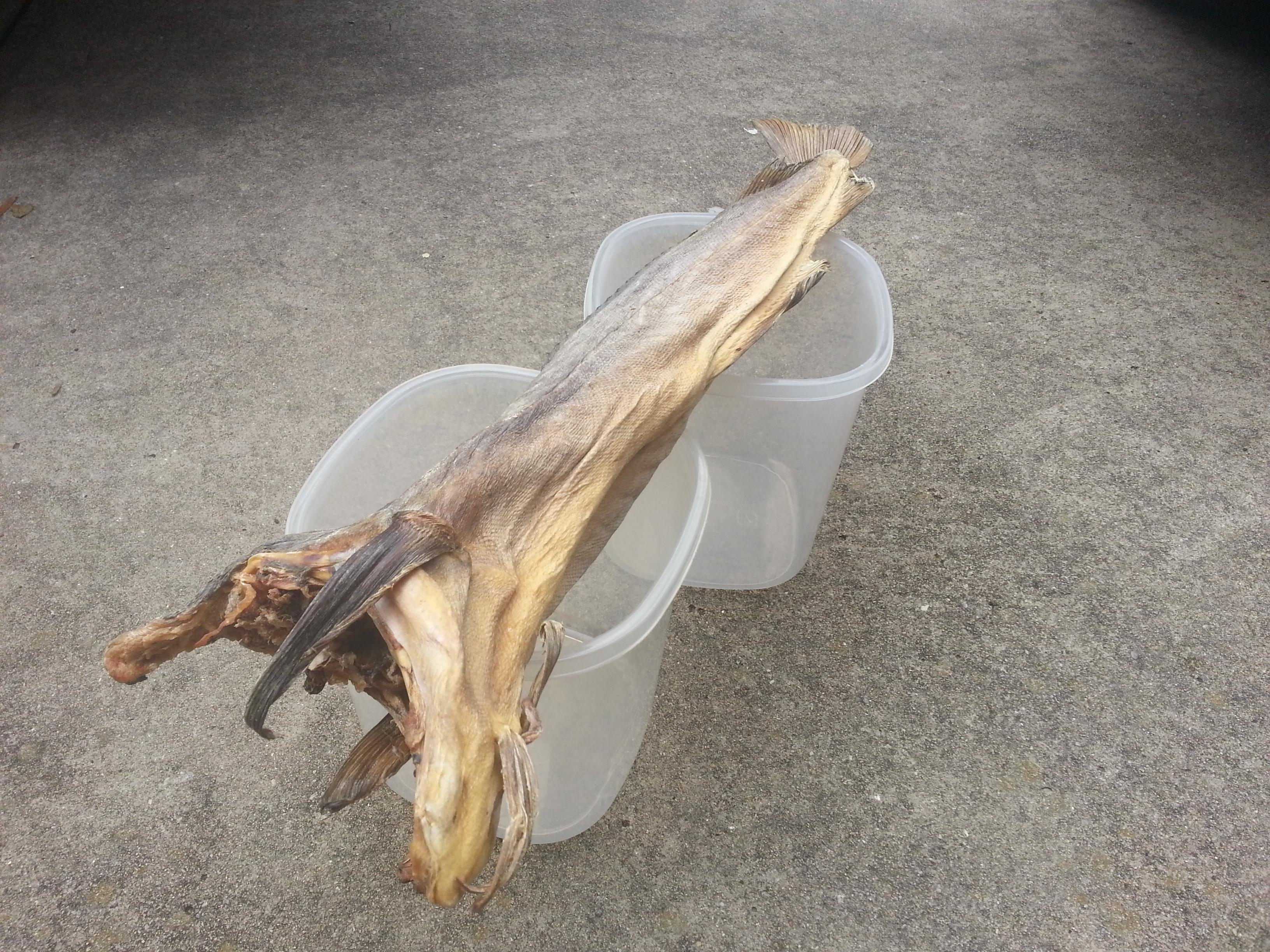
Pescestoccu ready for prep in my backyard
If you live near an Italian market, such as the one in South Philadelphia, you can find this fish there. However, now residing in the South, I had to mail order my fish from a distributor. The fish above was one of three I bought. Way too much for one dinner !
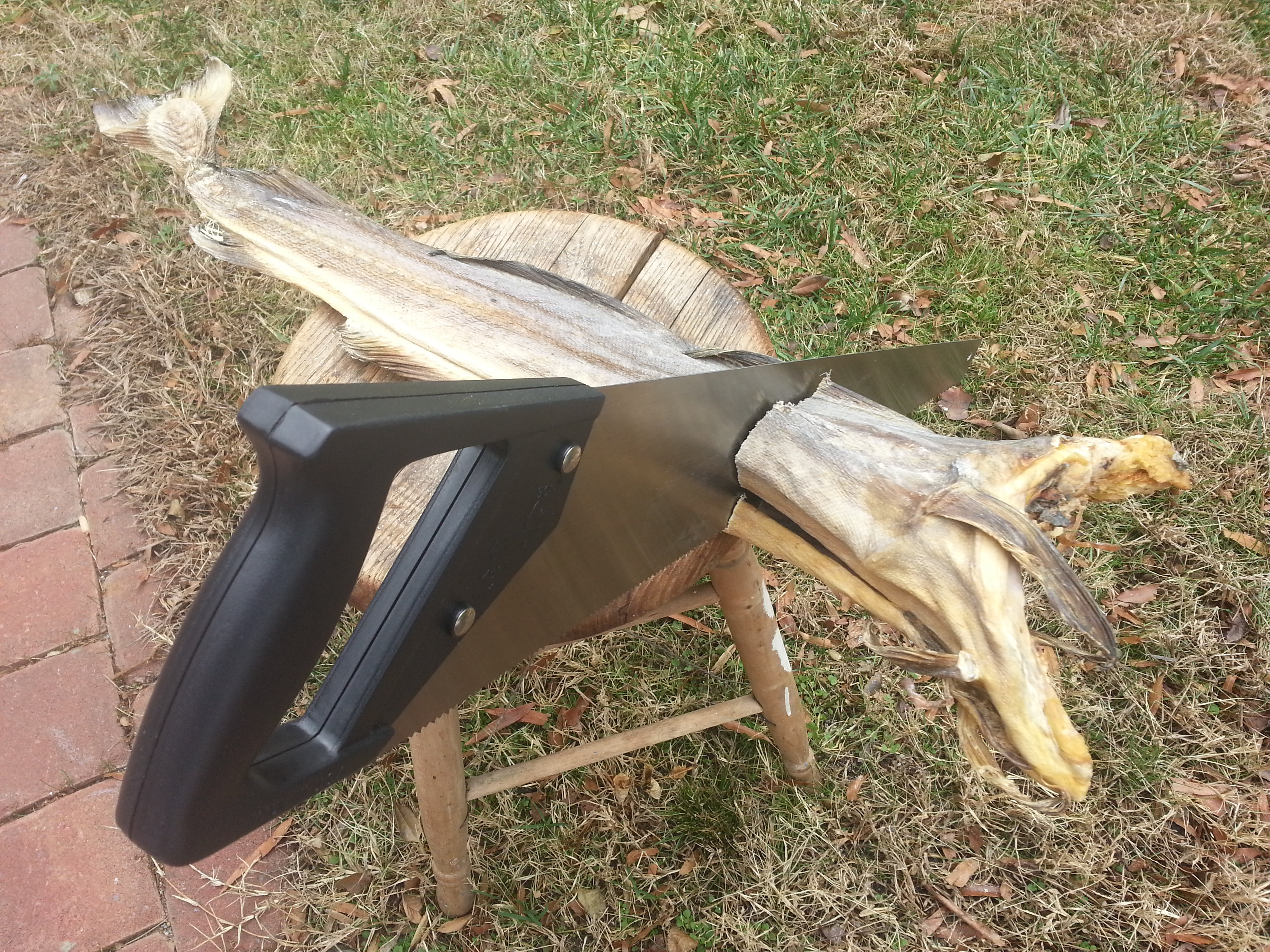
Sawing the Pescestoccu in to smaller pieces
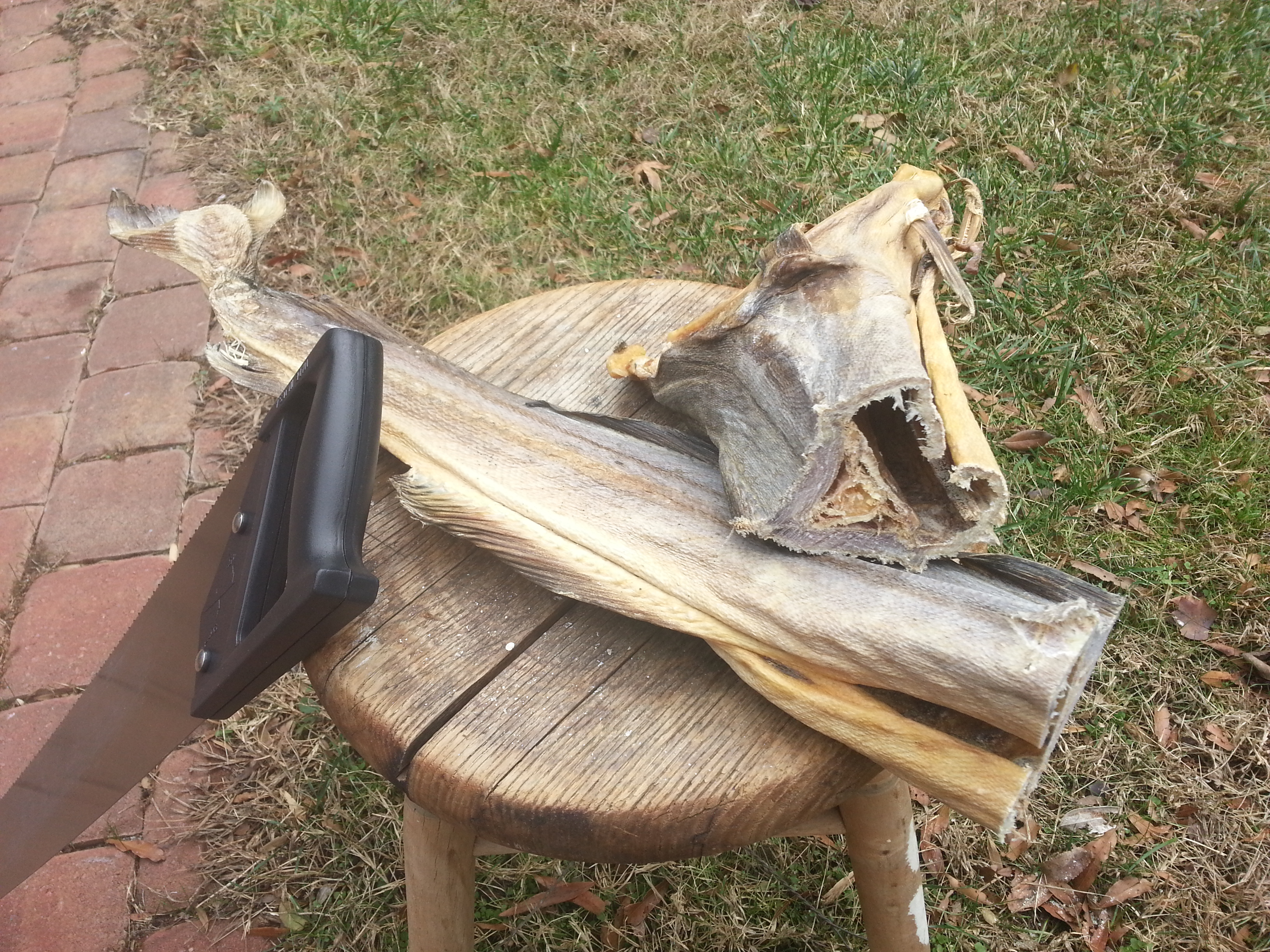
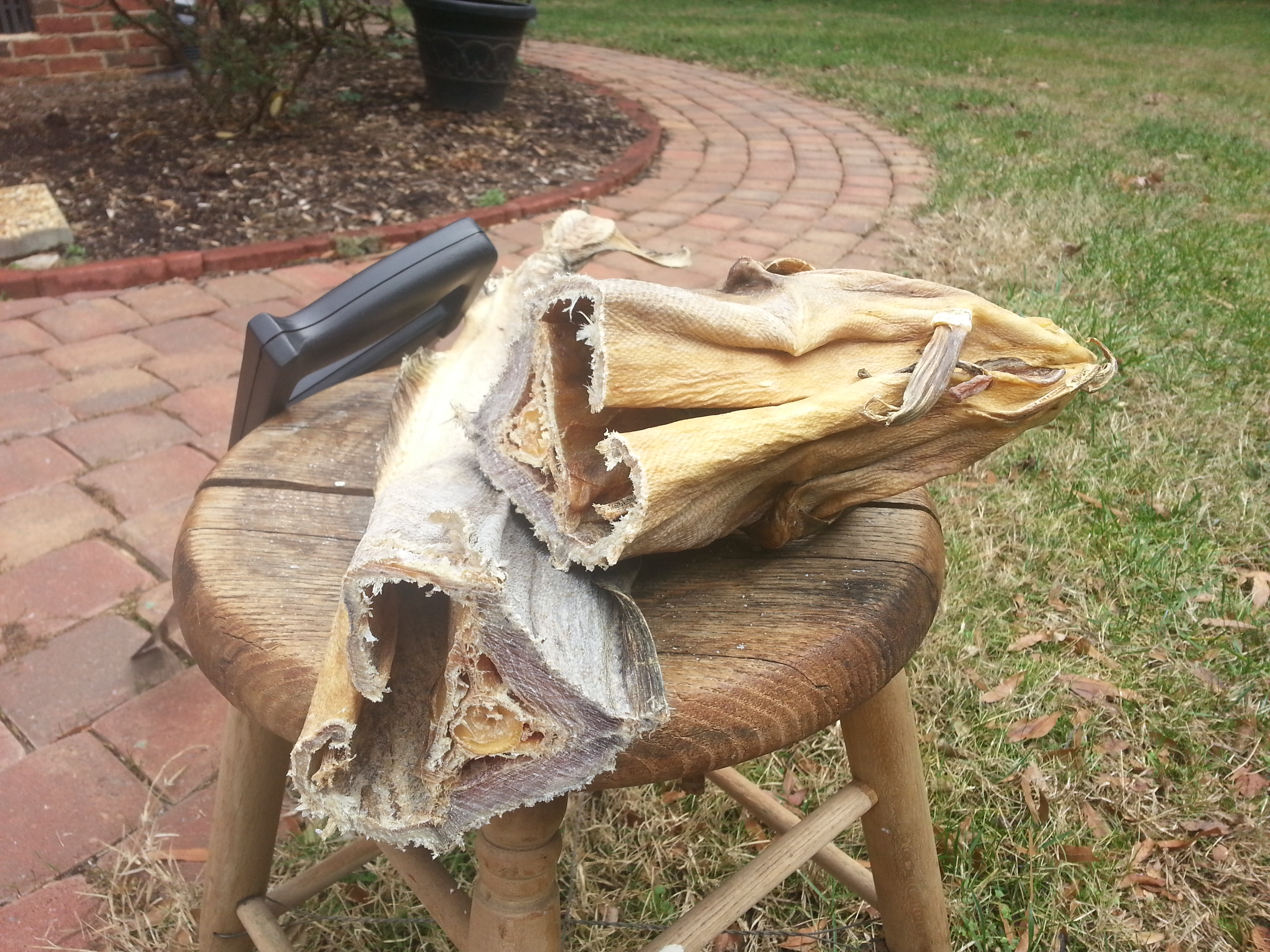
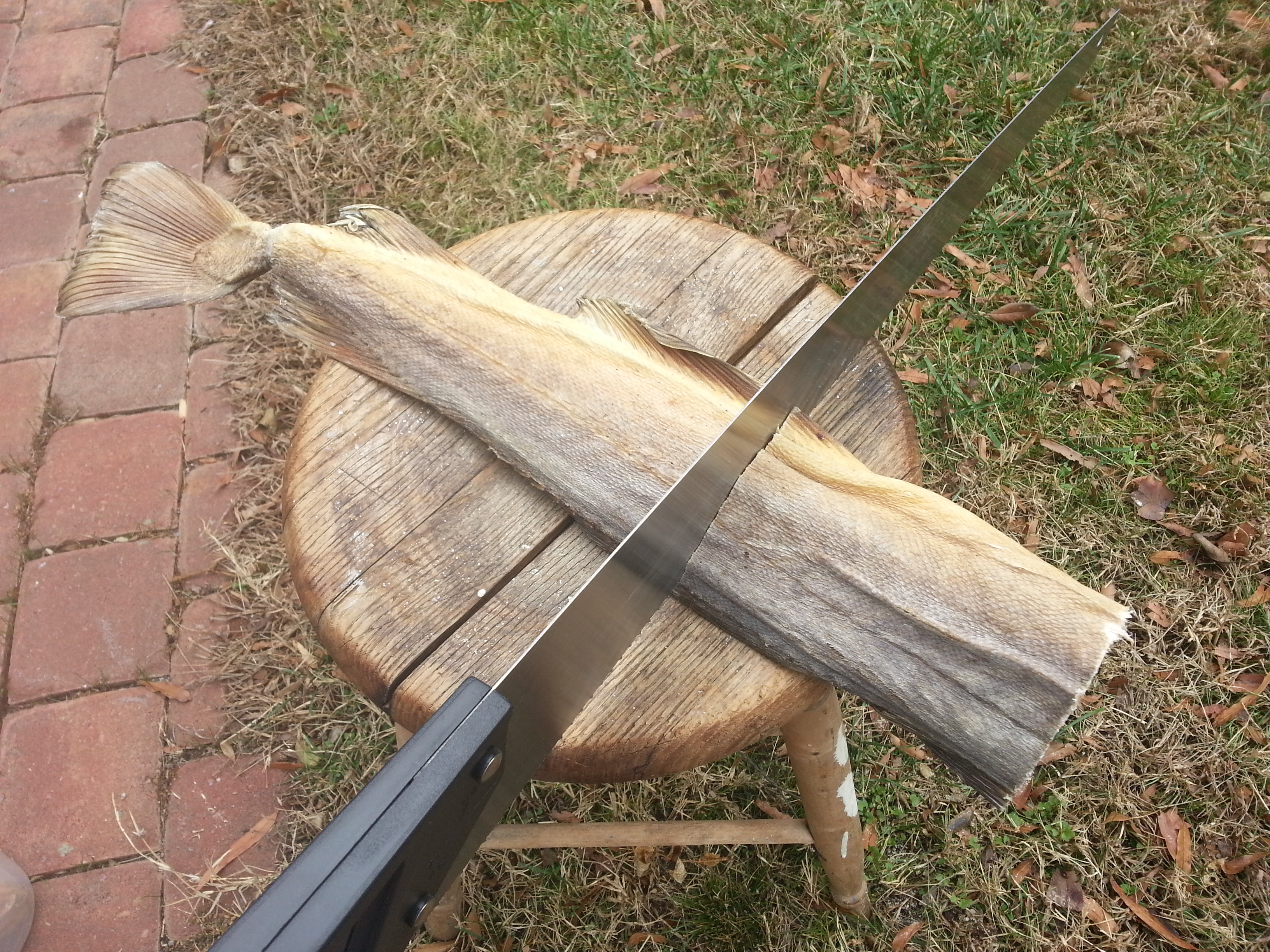
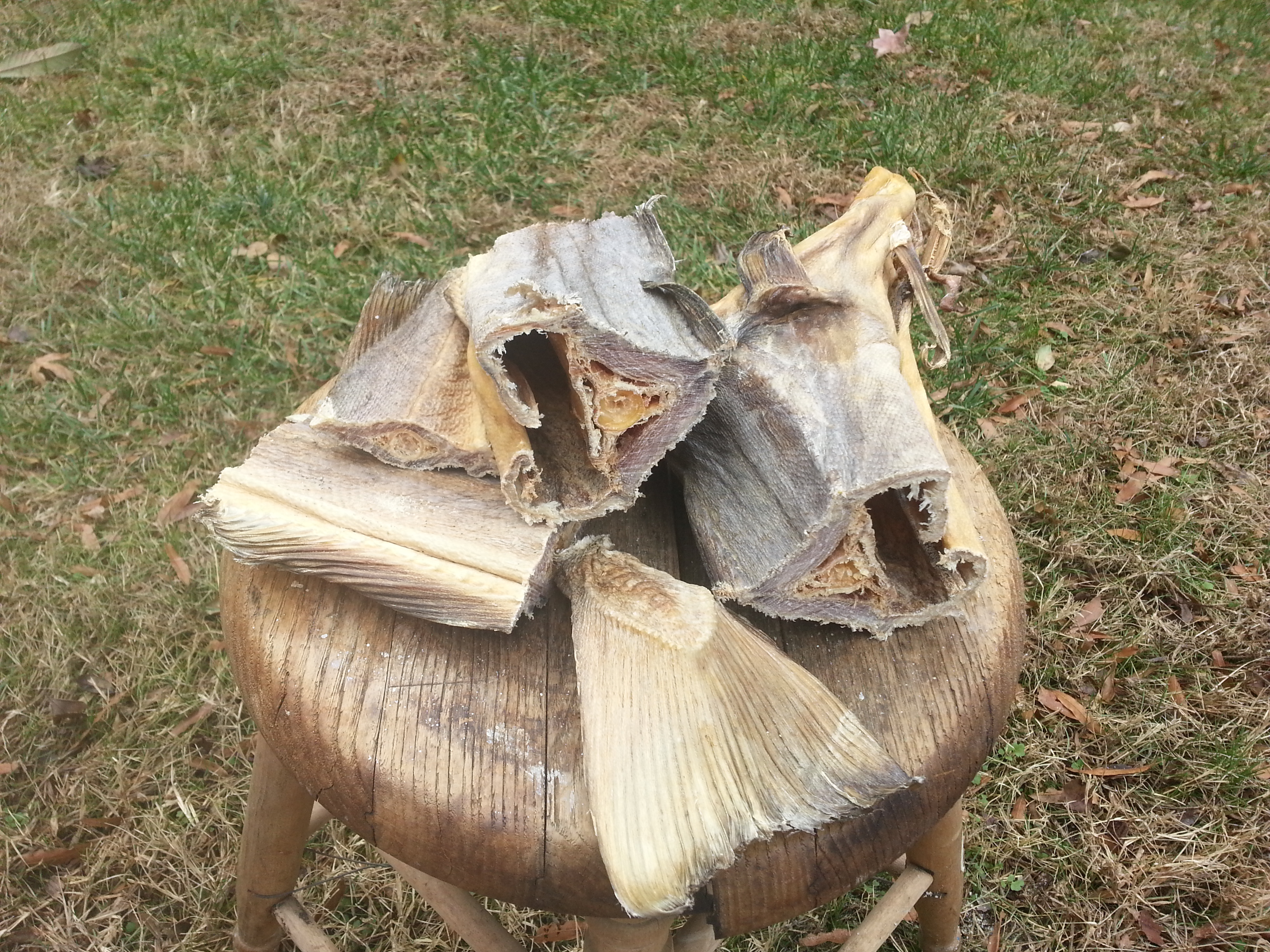
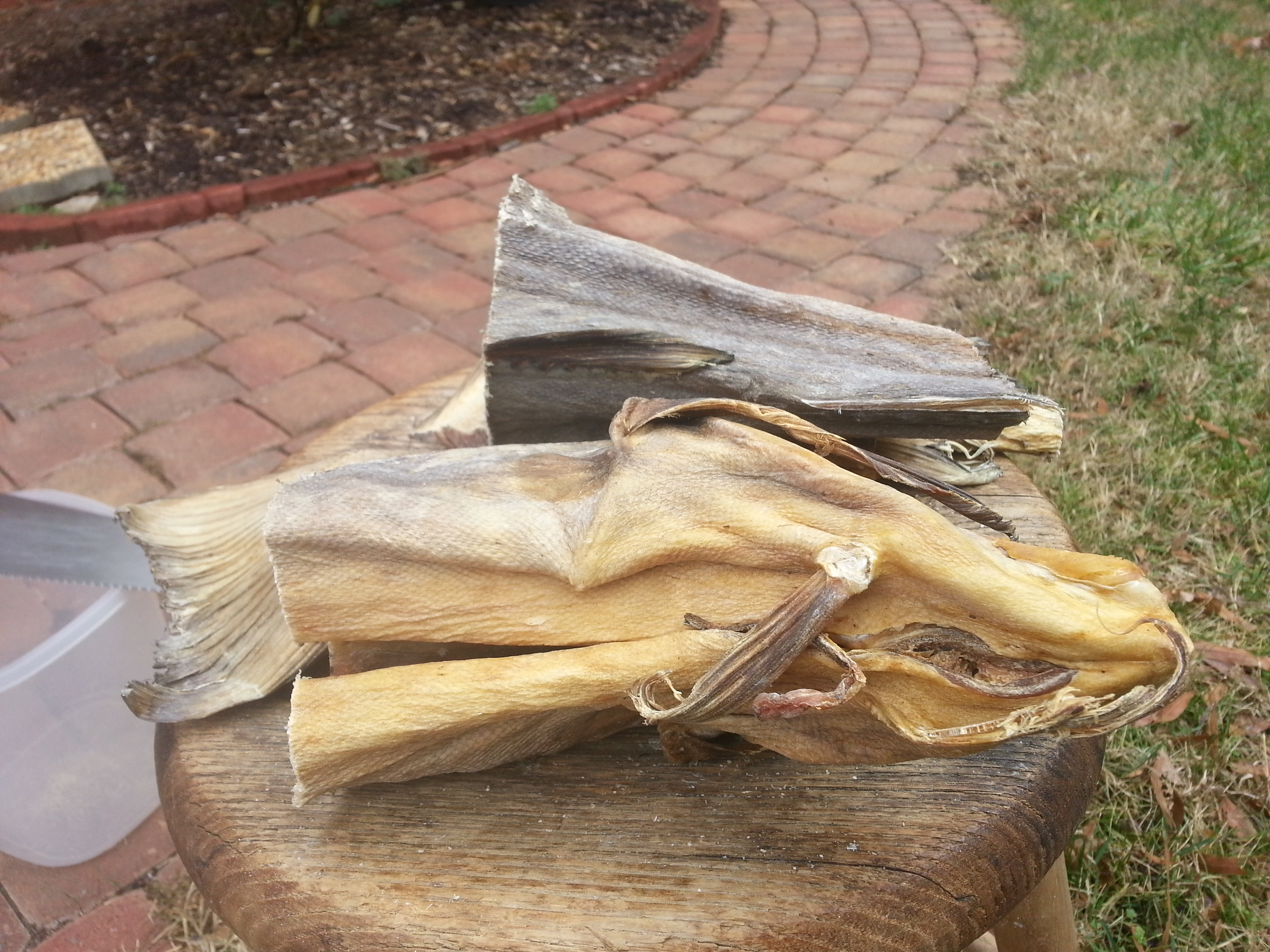
Now that’s an ugly fish !!! But, believe me, it is a delicacy !
The next step takes the most time and essential to the preparation of the fish for cooking or eating “raw” – Soaking in cold water. I usually put in large plastic containers in the refrigerator, and religiously change the water at least twice a day, more if you can. This hydrates the fish to a rubbery consistency after about a week or so. Look for the flesh to become almost white in the thickest part, and no “fermentation” type smell.
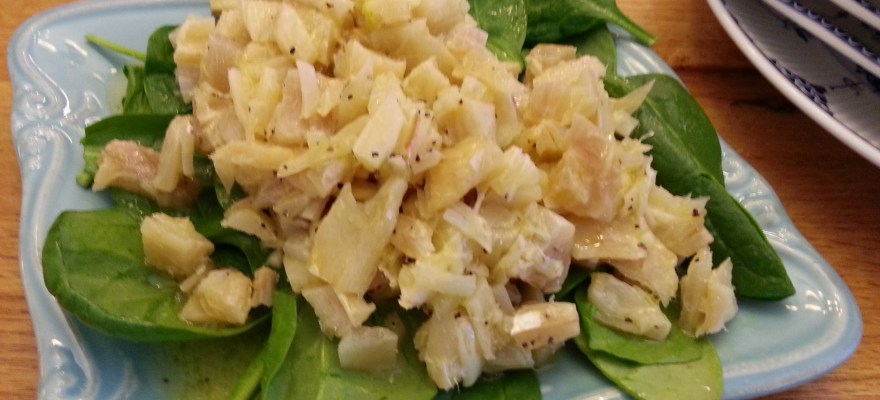
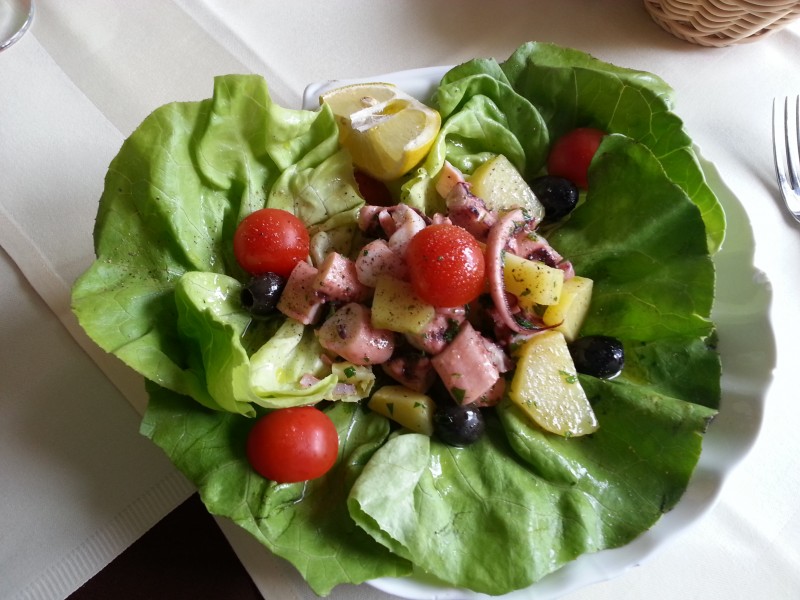
Once soft enough, you can cut the best pieces in to smaller chunks and make my favorite dish, Sicilian Fish Salad. Just toss the fish with some lemon, olive oil, and salt. Maybe a dash of pepper and serve cold. This is a very unique way of enjoying “Sicilian Sushi”. Very tasty.
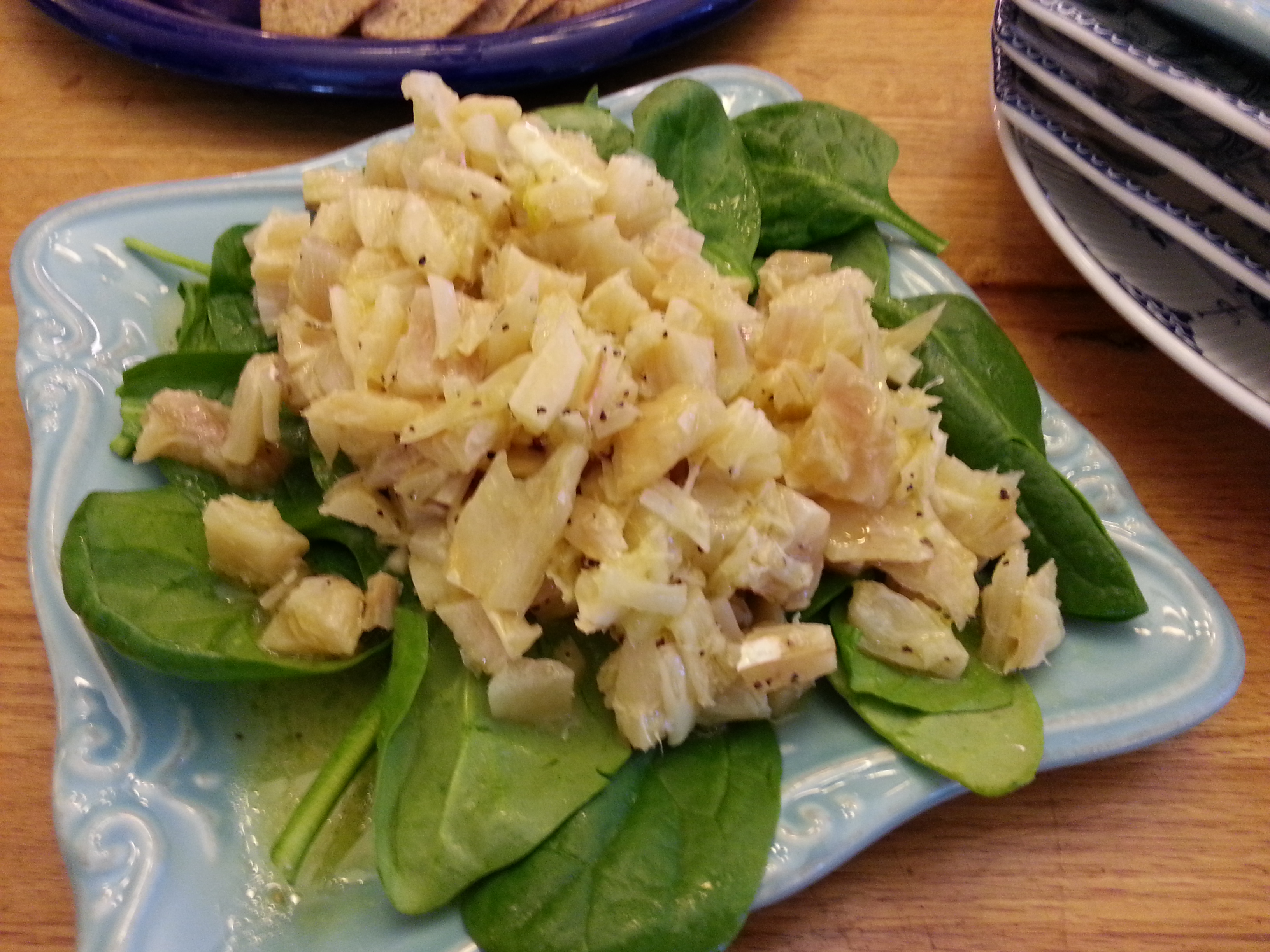
Pescestoccu Insalata – or “Sicilian Sushi”
My father loved this dish, and now my family does also.
You can also prepare the fish “white” – with capers, olive oil, lemon, white wine, fresh parsley – simmered in a large deep dish skillet until the fish begins to flake. Very flavorful!
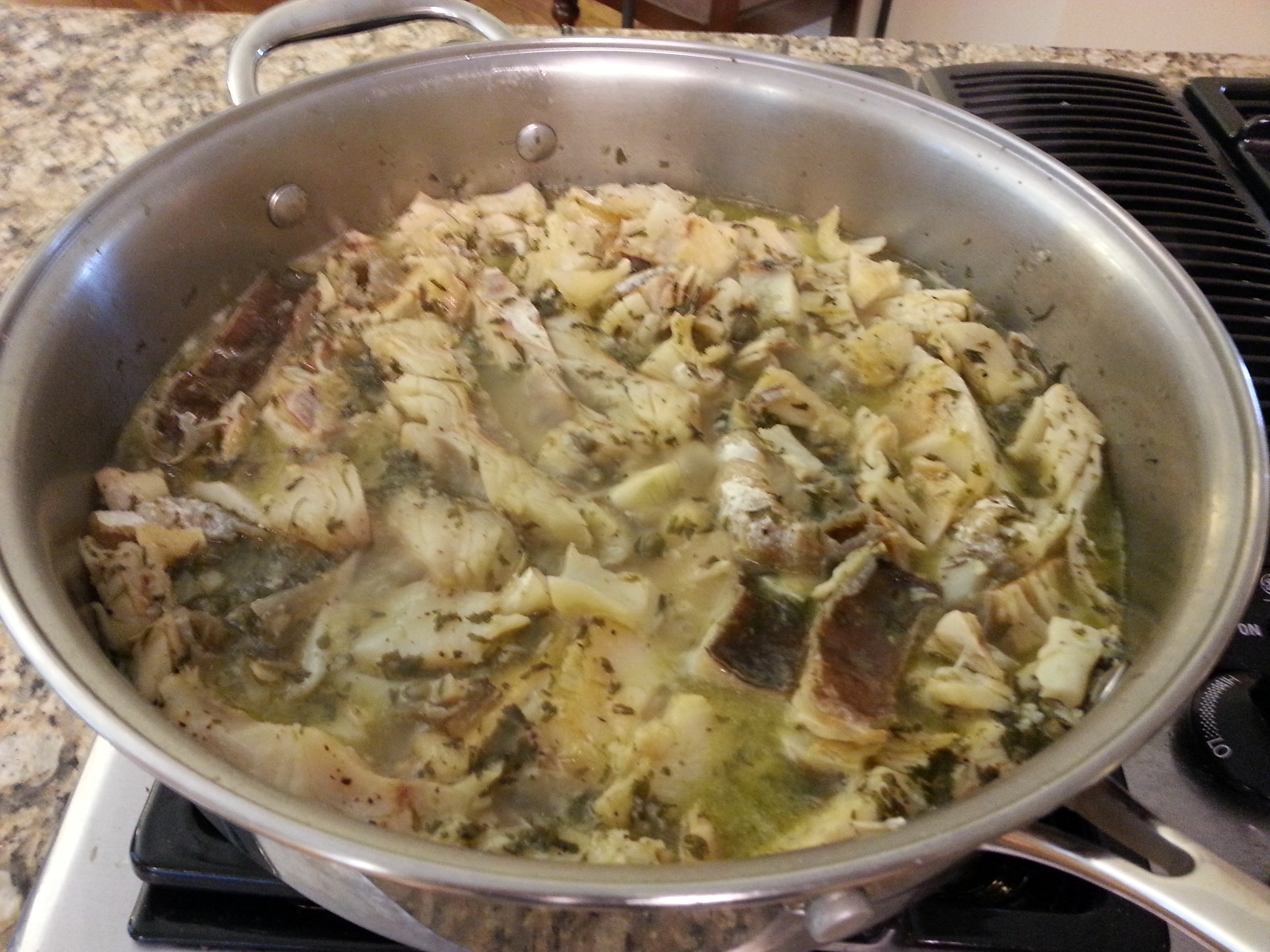
Pescestoccu – in white
Another method is to prepare the fish pan fried with a light egg batter cooked in olive oil until brown.
Lastly, you can make the fish in to a “red” variety, first preparing a light marinara sauce, and adding the fish at the end to cook for about 15 minutes until flaky. Cook up some nice pasta, place on a dish, and pour the mixture on top. This can also be done with the “white” method.
Both are dishes fit for a king, queen and the rest of the court. Eat like they did in the 9th century, and even today in special restaurants around the world. It will be hard to find, but worth the experience.
If you want to buy some, here is the link to the mail order company:
http://www.stockfishexpress.com/





 Culture Is Cuisine

